Why Raw Denim and Washed Denim Actually Need Opposite Washing Rules, and Most People Use Only One
A lot of denim care advice gets applied as one universal rule set, but raw, unwashed denim and pre-washed denim actually need close to opposite washing habits, and applying the wrong set of rules to the wrong pair is one of the more common ways good jeans get ruined.

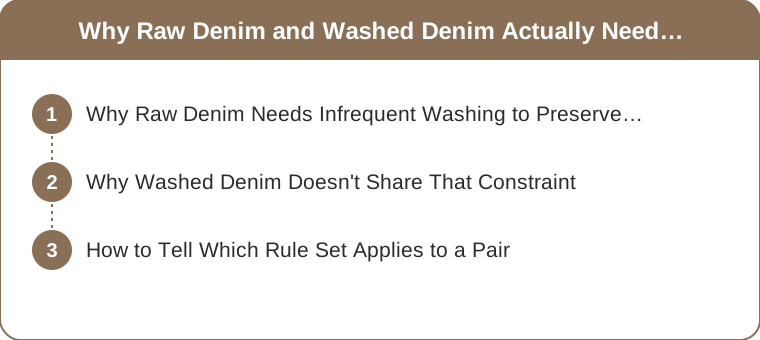
Why Raw Denim Needs Infrequent Washing to Preserve Fades
The mechanism: raw-denims-signature-fade-pattern-develops-from-indigo-dye-wearing-away-unevenly-at-points-of-repeated-friction-and-frequent-washing-resets-and-erases-that-developing-pattern (raw denim’s entire signature fade pattern developing specifically from indigo dye wearing away unevenly at points of repeated friction — creases behind the knee, at the pocket edges — over months of wear without washing, and frequent washing resetting and erasing that slowly developing pattern before it can fully form, per the raw-denim-actual-break-in-guide logic — raw-denims-entire-signature-fade-pattern-developing-from-indigo-dye-wearing-away-unevenly-at-points-of-repeated-friction-over-months-without-washing-and-frequent-washing-resetting-that-pattern-before-it-fully-forms), and the reframe (infrequent washing being the mechanism that actually produces the fade, not just a maintenance shortcut)).

Why Washed Denim Doesn’t Share That Constraint
The difference: pre-washed-denim-has-already-had-its-fade-pattern-artificially-applied-during-manufacturing-so-normal-washing-frequency-doesnt-erase-a-pattern-that-still-needs-to-develop (pre-washed denim having already had its fade pattern artificially applied during the manufacturing process itself, so normal, regular washing frequency doesn’t erase a pattern that was actually still in the process of developing, the way it would on raw denim, per the denim-care-fade-guide logic — pre-washed-denim-having-already-had-its-fade-pattern-artificially-applied-during-manufacturing-so-normal-washing-frequency-doesnt-erase-a-pattern-still-in-the-process-of-developing-the-way-it-would-on-raw-denim), and the frame (the fade already being finished on washed denim, so washing it normally doesn’t undo unfinished work)).
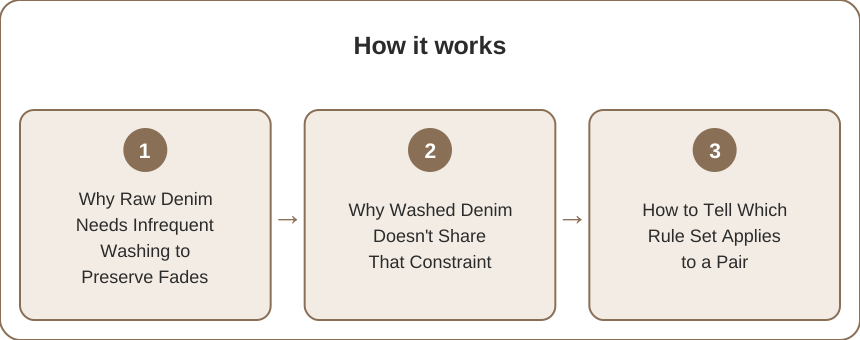
How to Tell Which Rule Set Applies to a Pair
The identifier: check-the-label-for-raw-dry-or-unwashed-denim-and-treat-only-that-specific-category-with-the-infrequent-wash-rule-washing-everything-else-normally (checking the garment label specifically for the terms raw, dry, or unwashed denim, and applying the infrequent-washing rule only to that specific category of jeans, while continuing to wash any pre-washed, distressed, or stone-washed denim on a completely normal schedule, per the how-to-wear-double-denim logic — checking-the-garment-label-specifically-for-the-terms-raw-dry-or-unwashed-denim-and-applying-the-infrequent-washing-rule-only-to-that-specific-category-while-washing-everything-else-normally), and the frame (the label, not a general denim instinct, being the actual signal for which of the two opposite rule sets applies).
Raw denim’s entire signature fade pattern develops from indigo dye wearing away unevenly at points of repeated friction over months without washing, and frequent washing resets that developing pattern before it can fully form, while pre-washed denim has already had its fade pattern applied during manufacturing, so normal washing frequency doesn’t erase a pattern that was never still developing. Checking the garment label specifically for the terms raw, dry, or unwashed denim, and applying the infrequent-washing rule only to that category while washing everything else normally, is the actual signal for which of the two opposite rule sets applies to a given pair.
Keep Reading
This article is for general styling and informational purposes only. Trends, sizing, availability and pricing may vary by brand and season.