Denim Diaries

Everything denim — jeans, jackets & beyond

The Rise Decides Everything: The Jeans Fit Guide That Starts at the Waistband

2026-07-16

Everyone shops jeans by cut and wash. Skinny or straight, dark or light, and then eleven pairs later you’re back where you started. The measurement that actually decides whether you’ll wear them is printed on approximately one product page in five, and most people have never checked it.

Quick Answer: Rise — the distance from the crotch seam to the top of the waistband — determines comfort, proportion, and whether you spend the day tugging. High rise runs about 10–12 inches and sits at or above the navel; mid rise is roughly 8.5–10 inches and sits just below it; low rise is under 8.5. Settle the rise first, then compare cuts. It cuts a fitting-room session roughly in half.

The Rise Decides Everything: The Jeans Fit Guide That Starts at the Waistband

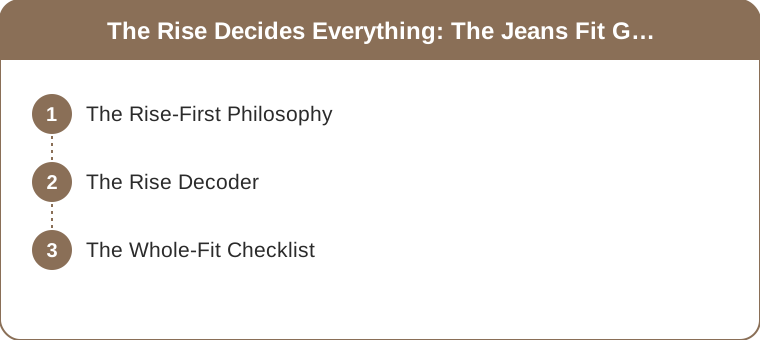
At a glance

Why Should You Fit Jeans From the Waistband Down?

Because every complaint people have about jeans lives at the waistband.

The digging. The gap at the back. The slow slide down over a workday. The constant hitch-up after sitting. None of those are cut problems — a straight leg and a bootcut in the same wrong rise will both do it.

Rise also draws your proportions. Wherever the waistband sits is where your torso visually ends and your legs visually begin. Raise the band and the legs read longer; drop it and they read shorter. That single line does more for proportion than the shape of the leg below it.

And the label doesn’t tell you the landing point. The same 10-inch rise sits at the navel on one person and two inches below it on another, because torso length varies far more than height does. “High rise” describes the garment; where it lands describes you.

The fitting-room efficiency: settle rise first and you skip whole racks. Instead of trying eleven pairs across three rises, you try four pairs in the one that works.

The Rise Decides Everything: The Jeans Fit Guide That Starts at the Waistband

High Rise vs Mid Rise vs Low Rise: What’s the Difference?

High rise (about 10–12 inches). Sits at or just above the navel.

  • Defines the waist at its narrowest point, which is why it’s the most flattering rise for most people
  • Tuck-friendly — the only rise where a full tuck reliably looks intentional
  • Particularly good on curvier figures, since it covers the fullest part of the hip smoothly
  • Long torsos often need the upper end of this range, or a “super high” 12+ inch rise
  • The honest caveat: very high rises can dig when you sit for long stretches. Test seated before buying

Mid rise (about 8.5–10 inches). Sits just below the navel.

  • The diplomatic zone. Suits many, excites few, and rarely goes badly wrong
  • Comfortable for long sitting, since there’s less band to fold at the waist
  • Works untucked or half-tucked; a full tuck can look slightly unresolved
  • Watch the labels — plenty of “mid rise” jeans are closer to low, and vice versa

Low rise (under 8.5 inches). Sits at the hip.

  • A deliberate styling statement rather than a default, and it needs the rest of the outfit to agree
  • Pairs with untucked or cropped tops; a tuck doesn’t work here
  • The comfort reality: less coverage when seated, so it’s a standing-day rise

One thing that changes with rise: hem length. Raising the rise raises where a given inseam lands, so re-check the hem every time you switch rises. It’s the most common reason a pair that “fits” still looks off.

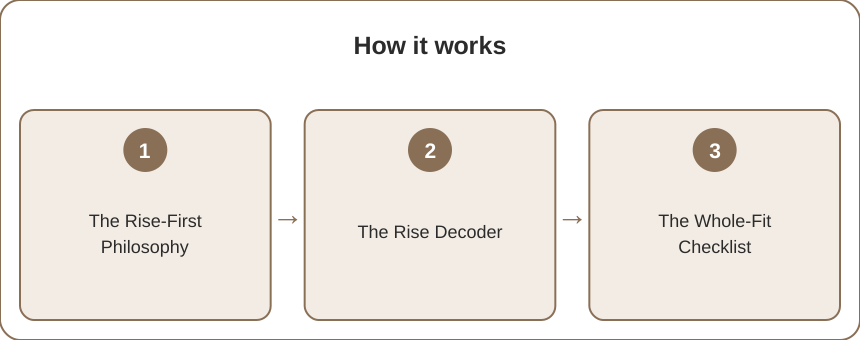
How it works

What’s the Full Fit Checklist After the Rise?

Once the rise is settled, run these six checks in order:

  1. The two-finger waistband test, seated. Standing, you should fit two fingers between band and waist. Then sit down and check again — that’s where gapping and digging actually show up.
  2. The seat and hip read. Smooth without pulling. Horizontal pull lines across the seat mean too small; sagging under the seat means too large. Pocket placement matters too — pockets sitting too low or too far apart flatten the shape.
  3. The thigh pinch. Pinch the fabric at the thigh. Under half an inch of give in a stretch jean means it’ll be tight after an hour; two inches means it’ll bag out.
  4. The length decision. Cut-specific: wide legs want full length brushing the shoe, straight legs work cropped at the ankle bone, bootcuts need to reach the top of the boot. Decide the shoe first.
  5. The ten-minute rule. Wear them around the store. Sit, squat, walk, sit again. Denim relaxes and reveals itself over time in a way the mirror never does in thirty seconds.
  6. The wash preview. Check the stretch percentage on the label. High-stretch denim (3%+ elastane) is comfortable immediately and bags out fastest; rigid denim is uncomfortable for a week and holds shape for years.

5 Mistakes Everyone Makes

  1. Shopping by cut first. You end up comparing a wrong-rise straight leg to a wrong-rise bootcut and concluding you don’t suit jeans.
  2. Judging fit standing still. Almost every problem — digging, gapping, sliding — is a seated problem. Sit down in the fitting room, every time.
  3. Sizing down for the waist. If the waist gaps but everything else fits, that’s a tailoring job, not a size change. Taking in a waistband typically runs $20–30 and it’s the single best money in denim.
  4. Buying high-stretch for comfort. It feels great in the store and bags out at the knees within a season. Aim for 1–2% elastane if you want both.
  5. Ignoring the hem. A pair hemmed to the shoe you actually wear looks noticeably more expensive than the same pair off the rack.

The third one surprises people, because a gapping waistband feels like a fit failure and it’s actually the easiest fix on this list.

How Does Your Day Affect Which Rise You Need?

More than most guides admit.

  • Desk-heavy days favor mid to high rise with a bit of stretch. The band needs to sit comfortably through hours of sitting
  • Standing or active days allow more freedom, including lower rises and rigid denim
  • Anything involving bending or floor time — small kids, gardening — argues for a genuinely high rise, since coverage is the whole issue
  • Long travel days favor mid rise with stretch, since that’s the most forgiving combination for sitting

It’s worth owning two rises for two kinds of days rather than one compromise pair for both. A pair of high rise straight leg jeans for standing days and a mid rise with a touch of stretch for desk days covers most lives better than a single “perfect” pair ever will.

FAQ

What rise is most flattering on most body types?

High rise, because it defines the waist at its narrowest point and lengthens the leg line. That said, a high rise that digs when you sit isn’t flattering on anyone — comfort seated is part of the test.

How do I measure the rise of jeans I already own?

Lay them flat and measure from the crotch seam straight up to the top edge of the waistband. Do this on the pair you reach for most and you have a target number for every future purchase.

Can a tailor change the rise of jeans?

Not practically — rise is built into the pattern. A tailor can take in the waistband, shorten the hem, or slim the leg, but changing rise means rebuilding the jean, which costs more than a new pair.

TL;DR:

  • Rise decides comfort, proportion, and all-day tugging — settle it before comparing cuts
  • High rise (10–12 in.) defines the waist and tucks; mid (8.5–10 in.) is the comfortable middle; low is a styling choice
  • Always test the waistband seated, not just standing
  • A gapping waist is a $20–30 tailoring job, not a reason to size down
  • Re-check hem length whenever you change rise
  • Wear them ten minutes in the store; denim reveals itself over time

Rise first, cut second, tailor third. When the waistband disappears from your attention entirely, the fit is right — and that’s the whole victory.

Keep Reading

This article is for general styling and informational purposes only. Trends, sizing, availability and pricing may vary by brand and season.

jeans rise guidehigh rise vs mid risejeans fit waistband

← All articles