Why 'Jeans for Your Body Type' Advice Usually Points at the Wrong Variable
Body-type jeans guides sort women into shape categories and assign a cut to each, but the actual variable that predicts whether a specific pair of jeans will fit well has much less to do with overall body shape than it seems.

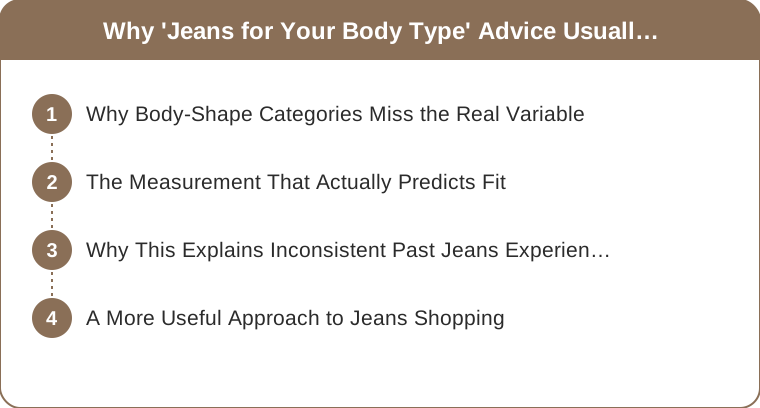
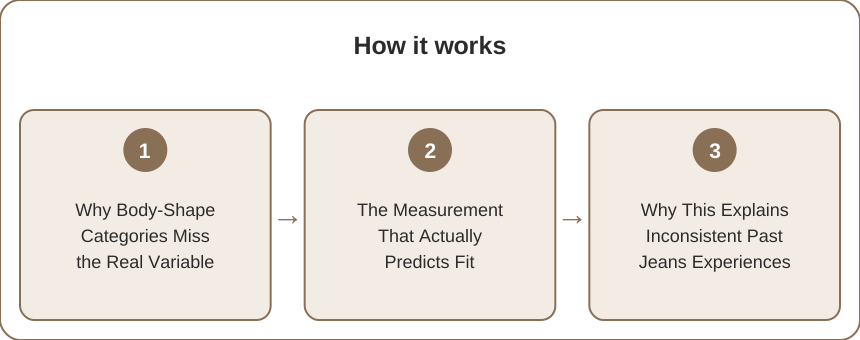
Why Body-Shape Categories Miss the Real Variable
The mismatch: broad body-shape categories, pear, hourglass, rectangle, grouping together people with genuinely very different rise, thigh, and waist-to-hip proportions, which means the same shape label can point to jeans that fit completely differently on two different people.
The Measurement That Actually Predicts Fit
The better variable: the specific relationship between waist measurement, hip measurement, and rise length on an individual body predicting jeans fit far more reliably than a general body-shape label ever could, since two people with the same shape label can have very different versions of that specific relationship.

Why This Explains Inconsistent Past Jeans Experiences
The pattern this explains: someone finding one specific jeans cut fits perfectly at one brand and terribly at another despite both being labeled the same body-shape category, since the underlying rise-to-hip-to-waist relationship, not the shape label, is what actually varies between those brands’ pattern blocks.
A More Useful Approach to Jeans Shopping
The practical shift: taking actual waist, hip, and rise measurements and comparing them directly against a specific brand’s size chart and rise measurement, rather than relying on a general body-shape category to predict fit, and the frame (jeans fit is predicted far more reliably by the specific relationship between waist, hip, and rise measurements than by a broad body-shape category, which is why the same shape label can point to very different actual fits.)
Body-type jeans guides sort women into shape categories, pear, hourglass, rectangle, and assign a cut to each, but broad shape categories group together people with genuinely very different rise, thigh, and waist-to-hip proportions, which means the same shape label can point toward jeans that fit completely differently on two different people. The specific relationship between waist measurement, hip measurement, and rise length on an individual body predicts jeans fit far more reliably than a general shape label ever could, which explains why one specific cut can fit perfectly at one brand and terribly at another despite both being labeled the same body-shape category, since it’s the underlying rise-to-hip-to-waist relationship, not the shape label, that actually varies between brands’ pattern blocks. Taking actual waist, hip, and rise measurements and comparing them directly against a specific brand’s size chart and stated rise measurement is a considerably more reliable approach to finding a good fit than relying on a general body-shape category alone.
Keep Reading
This article is for general styling and informational purposes only. Trends, sizing, availability and pricing may vary by brand and season.